Understanding Pistons and How They Affect Engine Performance
Pistons are at the heart of every internal combustion engine. Whether you’re putting together a reliable street cruiser, a bracket car, or a serious boosted build, the pistons you choose will have a huge impact on power, noise, and long-term durability. Choosing the wrong piston can lead to broken ring lands, scuffed skirts, or even catastrophic engine failure under load.
At Fastime Performance in Taylor, Michigan, we build and machine engines every day, and we see firsthand what happens when pistons are matched correctly — and when they’re not. This guide will walk through what pistons do, the different types available, and how to choose the right pistons for your next build.
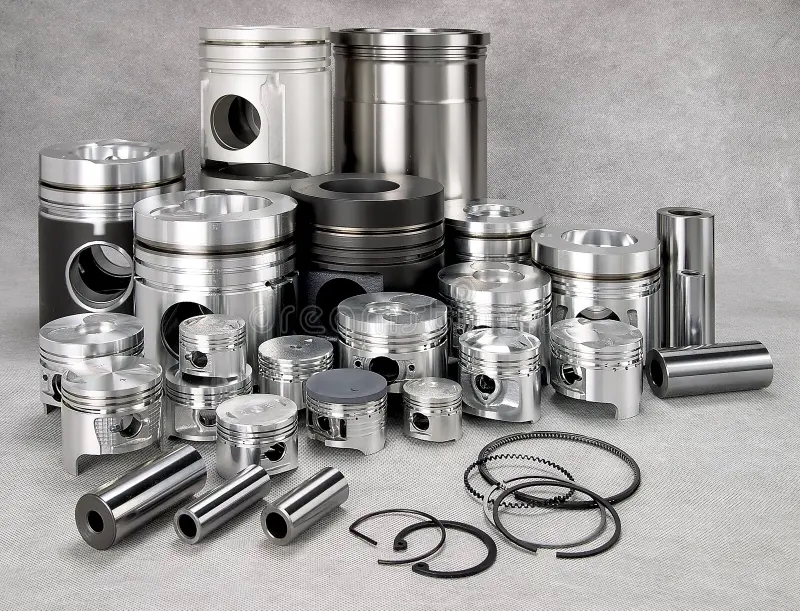
What Does a Piston Actually Do?
Inside the cylinder, the piston is the moving part that turns combustion pressure into crankshaft rotation. During the power stroke, expanding gases from the burning air/fuel mixture push the piston down, transmitting force through the connecting rod to the crankshaft. For this to happen reliably, each piston has to:
- Seal the combustion chamber to keep pressure above the piston and prevent blow-by into the crankcase.
- Survive extreme heat and pressure without cracking, deforming, or collapsing.
- Transfer heat from the crown to the cylinder wall via the rings and skirt.
- Maintain proper clearance in the bore with minimal friction and wear.
Piston rings are critical here. They create the seal between the piston and cylinder wall, help control oil on the cylinder walls, and assist with heat transfer. The combination of piston design, ring package, and cylinder finish is a major factor in how quickly an engine seats, how well it holds compression, and how long it lives.
Piston Materials and Types
Not all pistons are created equal. Different materials and manufacturing processes offer different strengths, weight characteristics, and expansion rates. Matching these to your goals is key.
Cast Pistons
Cast aluminum pistons are common in OEM and budget builds. Molten aluminum is poured into a mold and allowed to cool into shape. Benefits include:
- Lower cost compared to other types.
- Good for stock or mild performance engines.
- Acceptable durability in low-to-moderate power applications.
The downside is strength. Cast pistons typically don’t tolerate detonation, heavy nitrous, or high boost very well. If you’re planning aggressive tuning or hard abuse, they’re usually not the right choice.
Hypereutectic Pistons
Hypereutectic pistons are still cast, but they use a high-silicon aluminum alloy. The extra silicon changes how the piston expands with heat and allows tighter clearances.
- Excellent dimensional stability and reduced thermal expansion.
- Good for street performance and mild forced induction.
- Typically quieter and more “street friendly” than many forged options.
These pistons handle heat and everyday driving well, making them a solid option for naturally aspirated builds and moderate power increases, as long as detonation is kept under control.
Forged Pistons
Forged pistons start as a solid slug of aluminum that’s pressed into shape under high pressure before being machined. This process aligns the grain structure and significantly increases strength.
- Highest strength for high-RPM, high-horsepower, or boosted engines.
- Better resistance to detonation, heavy load, and shock.
- Often allow more aggressive tuning, higher compression, or bigger boost.
Forged pistons typically require more clearance in the bore, and may be a bit noisier when cold (piston slap), but for serious performance builds they’re usually the right call.
Matching Pistons to Your Engine Goals
The best piston for your build depends on how you use the vehicle and how much power you’re realistically going to make. Here’s a practical way to think about it:
Street / Daily Driver Builds
For a mostly stock engine or mild upgrade used for commuting and cruising:
- Quality cast or hypereutectic pistons are usually sufficient.
- Focus on reliability, clean burn, and long service life.
- Keep compression and timing in a safe, pump-gas-friendly range.
Performance Street / Weekend Warrior Builds
If your engine sees spirited driving, occasional track nights, or mild boost:
- Hypereutectic or entry-level forged pistons are a good fit.
- Allows for a bump in compression and more aggressive camshaft profiles.
- Handles occasional nitrous or low-to-moderate boost (with proper tuning).
Serious Forced-Induction or Racing Builds
For high boost, big nitrous, or circle track/drag racing scenarios, the piston choice becomes critical:
- Forged pistons are strongly recommended.
- Look for thicker crowns, reinforced ring lands, and strong wristpins.
- Plan piston design around fuel type, target boost, and RPM range.
In this range, “good enough” pistons can turn into expensive failures very quickly. Planning the rotating assembly as a system — crank, rods, pistons, rings, and bearings — is the best way to protect your investment.
Key Piston Design Details to Consider
Material is only part of the story. When we’re spec’ing pistons at Fastime Performance, we also look at several important design details:
- Crown shape and compression height – Determines compression ratio and how the mixture burns in the chamber. Domed, flat-top, and dished pistons all have their place depending on head design and fuel.
- Ring package – Ring thickness, location, and land design affect sealing, heat transfer, and durability. Higher cylinder pressures (boost/nitrous) often call for stronger ring lands and carefully chosen ring materials.
- Skirt design and coating – Helps control friction, noise, and stability in the bore. Modern skirt coatings can improve startup wear and allow tighter clearances.
- Wristpin diameter and construction – A weak pin can bend or fail long before the piston itself. High-power builds usually get upgraded pins and locks.
- Recommended piston-to-wall clearance – Each piston manufacturer specifies a clearance range based on material and intended use. Correct honing and finish in the block are just as important as the piston choice itself.
This is why a proper machine shop and careful mock-up matter. Even the best pistons can fail if clearances are wrong, ring gaps are off, or the tune is unsafe.
Work With a Shop That Understands Pistons and Machining
Pistons are a major part of how your engine performs, but they don’t work in isolation. Cylinder heads, camshaft, fuel system, and tuning all need to work together around a realistic power goal and budget.
At Fastime Performance, we can help you:
- Select the right piston type and compression ratio for your application.
- Measure and machine your block to the correct bore, finish, and clearance.
- Match pistons with rings, bearings, and the rest of your rotating assembly.
Need Help Choosing Pistons? Contact Fastime Performance
If you’re planning a new engine build or upgrading your existing short block, we’re here to help you pick the right pistons and components for the job.
Visit our shop in Taylor, Michigan, or call (734) 947-1600 to talk through your goals, fuel type, intended use, and budget. We’ll help you choose a piston package that fits your build and keeps your engine strong for the long haul.